Detect Credential Fraud and Impersonation with
Identity Verification
Identity Verification
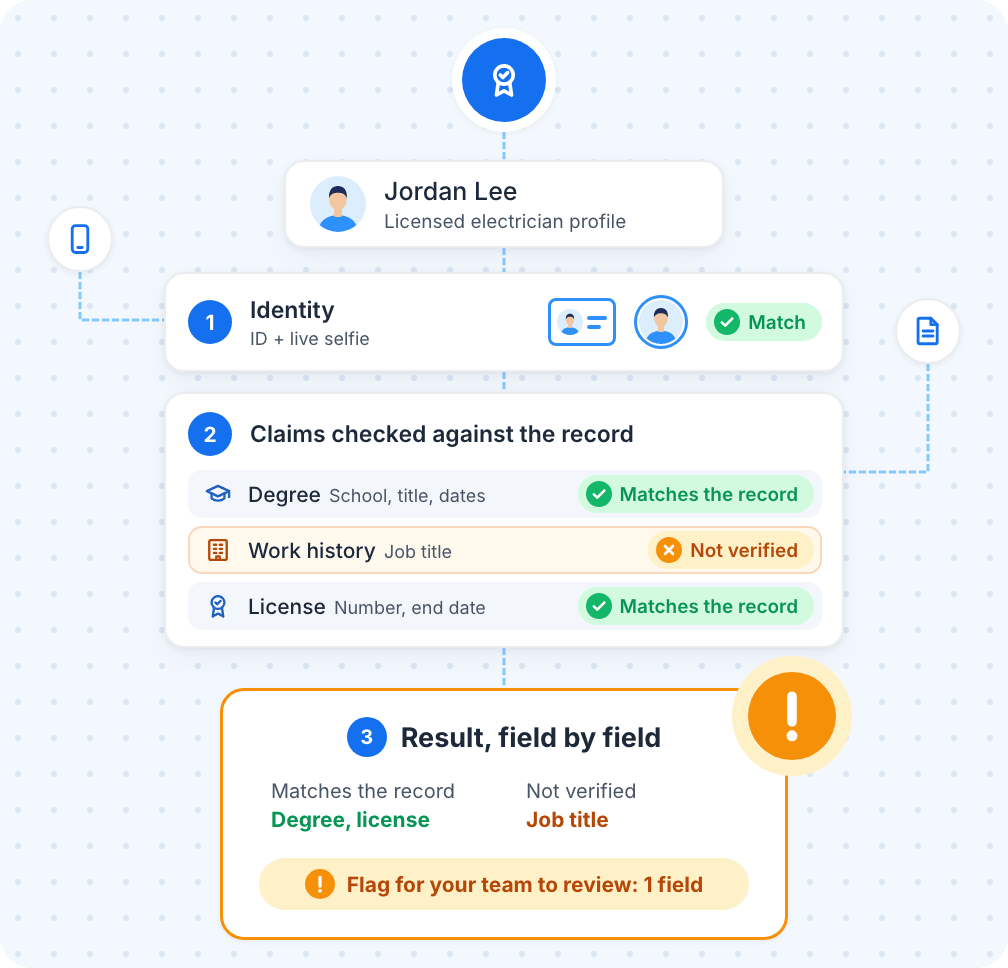
Credential fraud starts with what a person tells you: a degree, a job title, a license. Authenticate matches their face to a government ID, then checks each against education, work history, or licensing board records.
Authenticate is trusted by


Catch Fake or Stretched Credentials
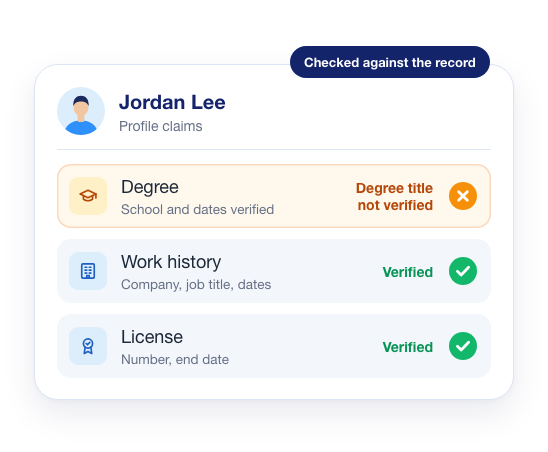
Each field returns verified or not verified
- Degrees from US colleges and universities
- US work history: company, title, and dates
- 4,200+ license types across all US states
Stop Impersonators With a Live Selfie
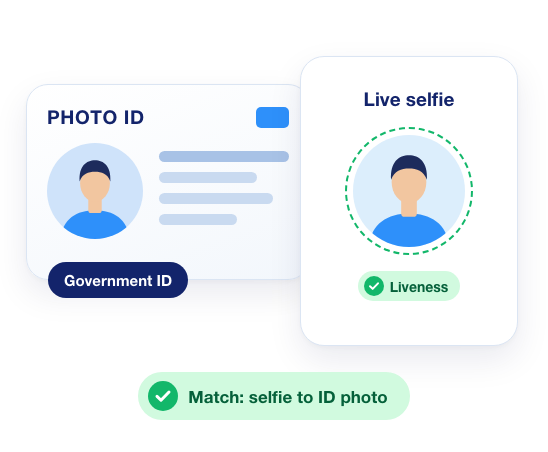
A borrowed identity still has to match the photo
- 16,000+ IDs from 254 countries and territories
- Selfie liveness tested to iBeta Level 2
- ID and selfie verified in 30 seconds
Pay Only for the Checks You Run
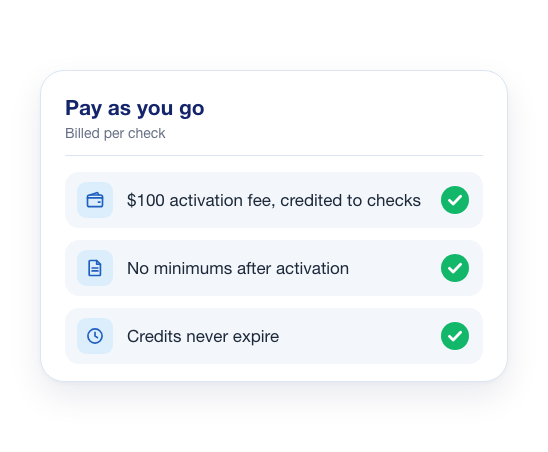
No minimums after the $100 activation fee
- $2 per ID check, with Liveness & Face Match
- $5 per credential check, plus fees except license
- Free selfie re-checks after a paid ID check
How Authenticate Detects Credential Fraud
Flag an Impersonator Using Someone Else's ID
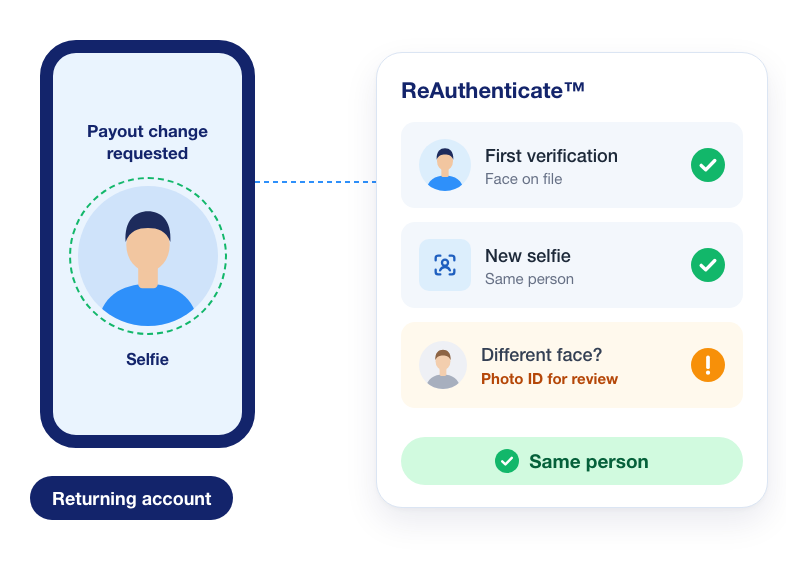
A photo of an ID tells you someone has a picture of a card, and little else. Authenticate reads the front, decodes the barcode on the back where there is one, and scores how likely the document is to be authentic. It then matches a live selfie to the ID photo, so a mismatched face is flagged. That face becomes the reference for later ReAuthenticate™ selfie re-checks, so a returning user is compared with the person who first verified.

Government ID Verification

Liveness & Face Match

ReAuthenticate Selfie Re-Check

Medallion™ No-Code Link
Spot a Fake Degree, Invented Job, or Fake License
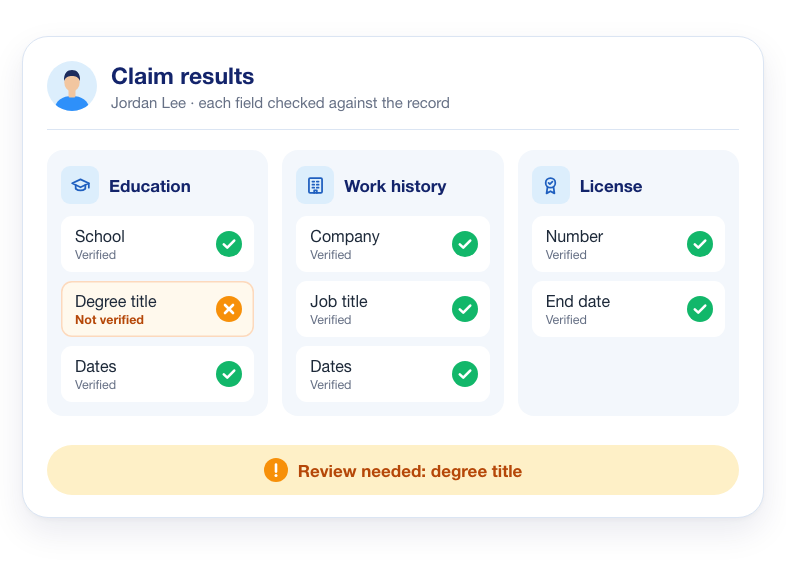
An identity-only check confirms the person and stops there, so a verified profile can still list a degree that was never earned. Authenticate sends each claim to the records that should hold it. The degree goes to education records, the job title and dates to work history records, and the license to licensing board data. Each field comes back with its own result, so you see exactly which claim didn't hold up.

Education Verification

Work History Verification

Professional License Verification

Manual Verification
Catch the Impersonator Before the Fake Degree
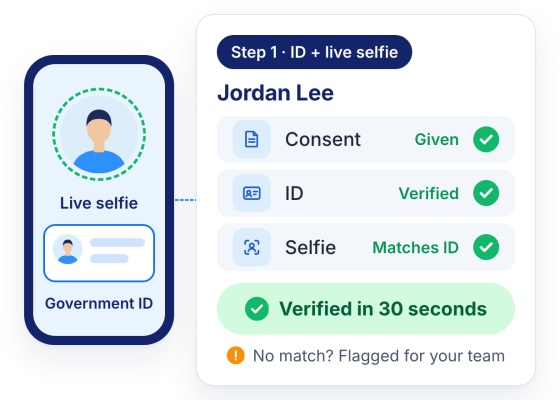
Authenticate scores the authenticity of each government ID and matches a live selfie to its photo. A verified degree tells you little about someone using a borrowed identity, so the credential checks run only after the identity is verified.

How to Prevent Credential Fraud in Four Steps
Every step runs through Medallion, Authenticate's no-code verification link, or through the API, and nothing starts until the person gives consent. The order matters, because a credential check is only as useful as the identity it's attached to.

Match the Face to the ID to Stop Impersonators
The person photographs a government ID and takes a live selfie on their phone. Authenticate verifies the ID and the selfie in 30 seconds. If the face doesn't match the ID photo, Authenticate flags the mismatch for your fraud team. The degree, work history, and license checks in step two run only after the identity is verified.

Expose Fake Degrees, Work History, and Licenses
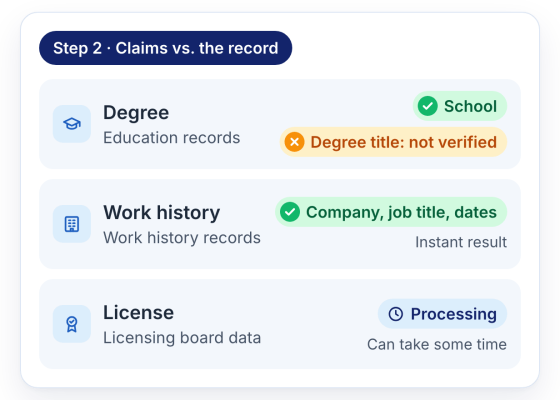
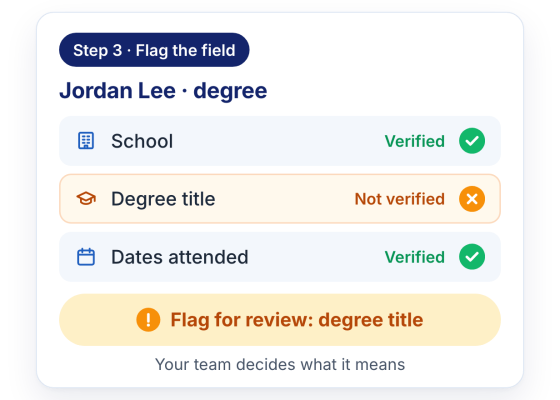
Send Authenticate the claims the person made, and each one is checked on its own. That means a real university paired with a degree title its records don't show for that person comes back with the school verified and the degree title not. Education and work history results from the records are instant, while a license check can take some time to process.

Degree title, school, and dates attended
Job title, company, and dates
License title, organization, number, and dates

Flag the Exact Claim That Doesn't Match
A not-verified field is a flag for your fraud team. The fields around it show what did hold up, so a reviewer starts with one specific question. If the school or company name doesn't verify, manual verification can contact it, which takes longer and works only if your request turned it on. Authenticate reports which field didn't match and doesn't decide anything about the person.

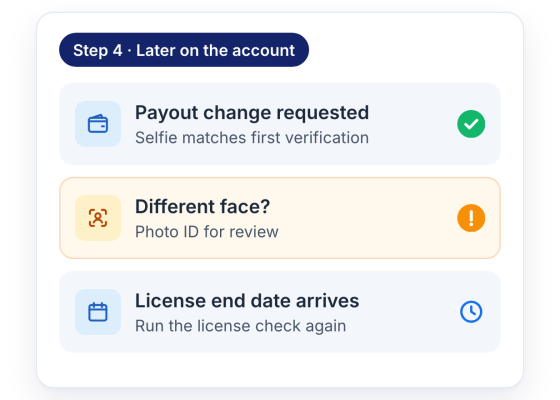
Catch a Different Face or Lapsed License Later
A signup check shows who was there on the day it ran. When a verified account later asks for a payout change or a new listing, a ReAuthenticate selfie shows whether the same person is there. If it doesn't match, ReAuthenticate accepts a government photo ID for review. A license check is a one-time look, so run it again once the license's end date arrives.
Resources
How to Spot a Fake ID: Face Comes First
Five face-first checks for spotting a fake ID, what a scanner can and cannot prove, and how to check an ID someone sends you as a photo.
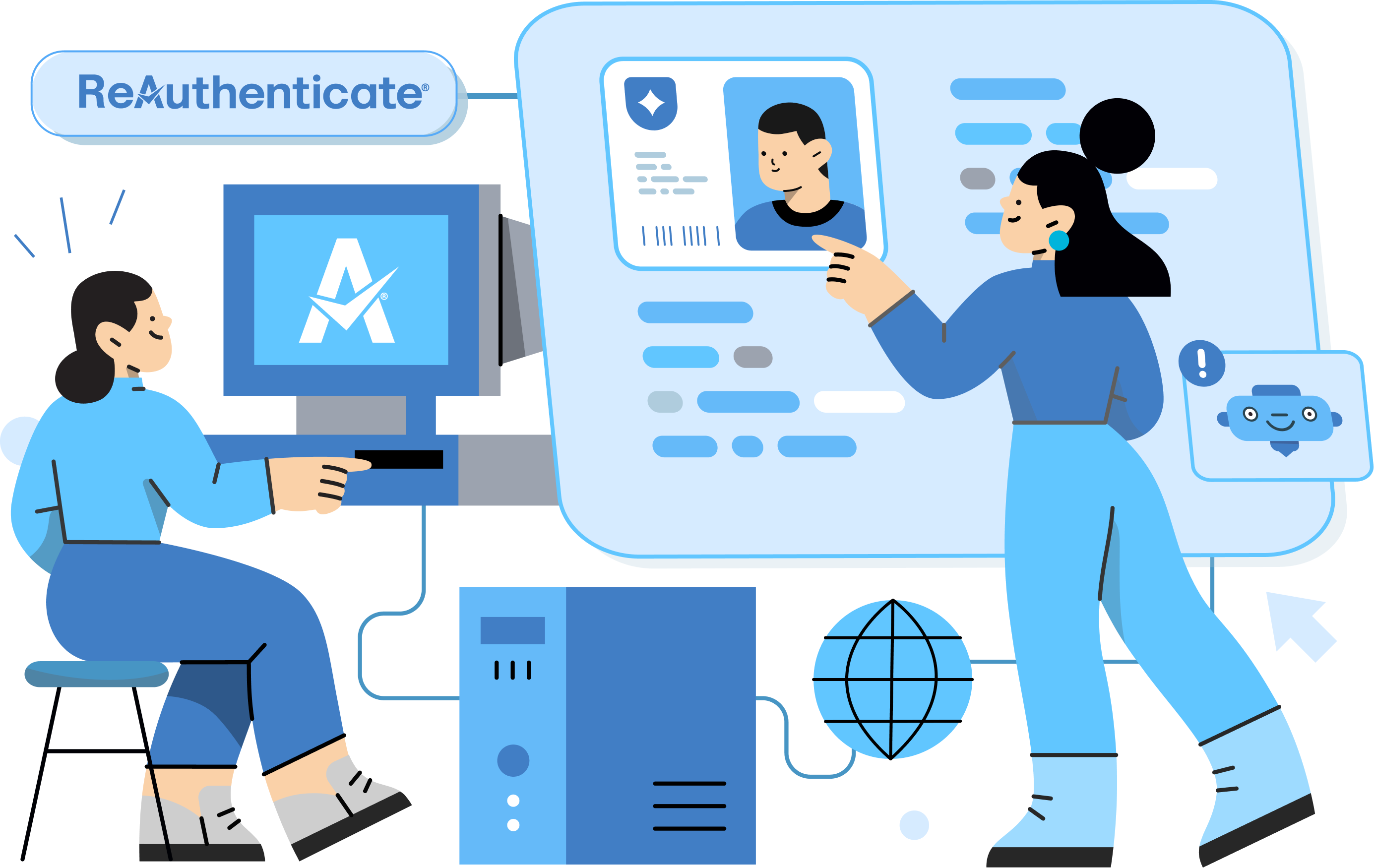
ReAuthenticate™: Re-Verify Users With a Selfie
See how ReAuthenticate™ re-checks a verified person with a single selfie, what it costs, and the integrations it shares with Medallion.
Looking for answers? Ask us anything.
This is your one stop shop to learn all about Authenticate, our features, pricing, & more.
Frequently Asked Questions
Credential fraud, fake degrees and licenses, stretched work history, deepfakes, coverage, and pricing.
What is credential fraud?

Credential fraud is a false statement about a credential: a degree that was never earned, a job title or dates that were stretched, or a professional license that is invented, lapsed, or someone else's. In account security, the same phrase means stolen usernames and passwords, which is a separate problem. The first kind can surface when a detail someone gave you is compared with education, work history, or licensing board records and doesn't match.
What is credential verification?
Credential verification catches a false or misstated degree, work history, or professional license by comparing what a person claims with the records that hold it, such as education records or licensing board data. On Authenticate, each field gets its own result of verified or not verified, from degree title and dates to job title, license number, and end date, so you see which part of the claim didn't hold up.
What is the difference between identity verification and credential verification?
Identity verification catches impersonation by confirming a person is who they say they are, usually by matching a live selfie to a government ID. Credential verification catches false claims by checking whether the degree, work history, or license they mention matches the records. The two answer separate questions, so passing one tells you nothing about the other. On Authenticate, the identity check returns an authenticity score and a face match, and each credential check returns a result per field.
How do you spot a fake degree?
You spot a fake degree by checking the school, degree title, and dates listed against education records, rather than trusting the diploma or the accreditor printed on it. Even the accreditor can be invented. In settlements announced in January 2015, the FTC's complaint said the owners of two online high school diploma mills had fabricated an accrediting organization to give their operation legitimacy. Authenticate checks US college and university degrees across 15,000+ institutions and returns a result for each field.
How do you check if a professional license is fake?
You can catch an invented or lapsed professional license by checking it against the board that issued it, since many state licensing boards publish lookups. Authenticate covers 4,200+ license types in all US states and compares the license title, issuing organization, number, and start and end dates with licensing board data. Each field gets its own result, returned with the license's state. A license check can take some time to process, and results arrive through the API and your dashboard.
How do you spot fake or stretched work history?
You spot invented or stretched work history by checking the company, job title, and dates claimed against work history records, and Authenticate returns a separate result for each. Each check covers US work history and costs $5, and results from the records are instant. If the company name doesn't verify, manual verification can contact the company directly for $15, which takes longer and works only if your request turned it on. Any third-party fees are added to both prices.
Does liveness testing cover deepfakes?
Liveness testing under ISO/IEC 30107-3 covers presentation attacks, such as a printed photo, a phone display, or a mask held up to the camera. Authenticate's liveness detection is tested to iBeta Level 2 under that standard. A deepfake fed straight into the video stream is a different kind of attack, which presentation-attack testing doesn't measure.
What happens when a claim doesn't match the record?
When a credential detail doesn't match its records, Authenticate marks only that field as not verified, so you might see a license number that checked out next to an end date that didn't. A school or company the records can't match comes back the same way, with its name not verified, and manual verification can then contact it if you requested it. A not-verified field is a reason to look closer, and your team decides what it means.
Where does credential fraud show up?
Credential fraud is a risk on marketplaces and directories that list licensed professionals, telehealth and services platforms, and professional networks, because the people using them rely on credentials they can't check themselves. On those platforms a false claim can sit on a public profile, so a degree, work history, or license that comes back not verified becomes a flag for your trust and safety or fraud team to review.
Can Authenticate catch credential fraud outside the US?
Authenticate's credential checks cover the US only: degrees from US colleges and universities, US work history, and US professional licenses. A degree or license from another country needs another route, although the identity side works internationally. The ID check recognizes 16,000+ government IDs from 254 countries and territories and runs in 38 languages, so a borrowed identity abroad still has to match a live selfie to the ID photo.
How do you add credential fraud checks to your platform?
Authenticate offers three ways to add credential fraud checks to your platform: a REST API, a Web SDK, and the Medallion no-code link you send from your dashboard. A Medallion workflow can add education, work history, and professional license checks after its ID and selfie step, without anyone writing code. Results come back through the API and your dashboard, and webhooks tell your systems whether each Medallion identity attempt succeeded.
How much does credential verification cost?
Credential verification on Authenticate costs $5 per license, education, or work history check. If a $5 check against the records is inconclusive, manual verification is available for $15. Education, work history, and manual checks are each billed plus any third-party fees. The ID check costs $2 with Liveness & Face Match, and ReAuthenticate selfies after that first paid check are free. Every attempt is billed, whatever the result, and the $100 activation fee is credited toward checks.
Stop Credential Fraud, One Check at a Time
Authenticate has processed more than 2 million users and holds a SOC 2 Type II report. Because you pay per check, start with the kind of credential fraud that costs you most, and add the other checks later.
Get Started

